


People who have run ads on Facebook or Instagram have noticed that campaign outcomes depend on more than just the chosen audience and budget. Meta’s ad selection and delivery have recently relied heavily on AI.
One of the systems that helped facilitate this change is Meta Andromeda. This AI-based ad retrieval system assists Meta in identifying ads that should be offered to users. Instead of using traditional audience settings, it analyses various signals originating from users and ads to determine possible matches.
For companies investing in social media marketing, this made it even more important to pay attention to the quality of the ad and the ad campaign test results.
What Is Meta’s Andromeda AI?
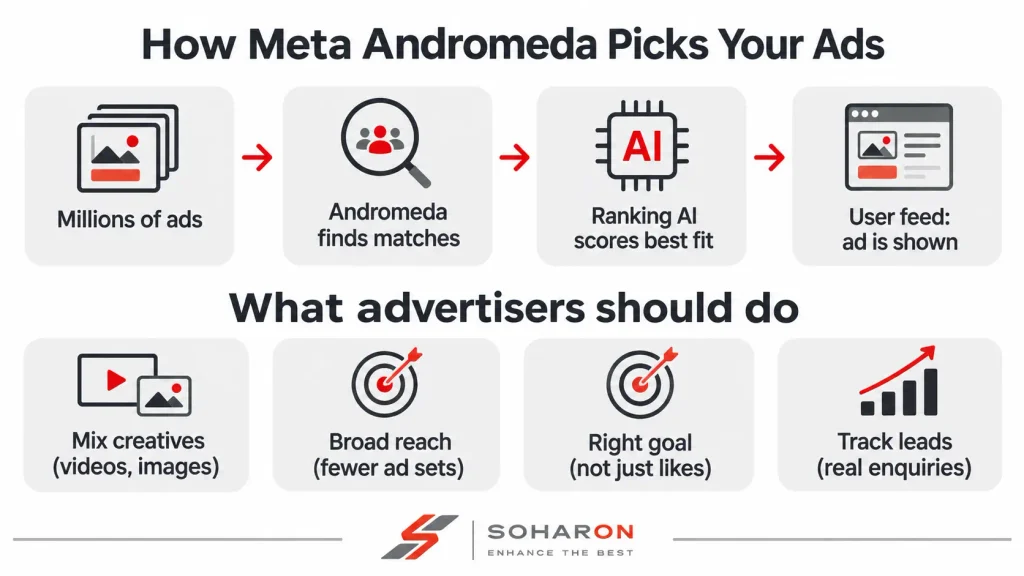
Andromeda is Meta’s personalised ad retrieval system. It works as an early stage in the process of selecting ads for Facebook and Instagram users.
Think about how many businesses are advertising on the Meta platforms. When you open Instagram, a huge pool of adverts that are potentially relevant to you.
Andromeda helps to narrow that pool down to a smaller set of relevant ads. The other AI systems then assess and rank those candidates to determine which ads are most appropriate to show.
How Andromeda Changes Ad Delivery
Previously, advertising strategies would spend a lot of time manually selecting audience interests, age, location, etc.
These settings are still valuable, but AI is now playing a bigger part in determining which ads are relevant to each individual.
Andromeda looks at signals relating to user interests, engagement behaviour and ad content to identify the ads that may be appropriate for a particular user.
Why Creative Quality and Variety Matter More
One major takeaway for advertisers is the need to give Meta’s AI different creative options to work with.
Creating several versions of the same advertisement with only minor text changes may not provide enough variety. Different visuals, messages and formats, backed by strong branding and graphic design, can help a business communicate with people who have different needs.
For example, a fitness centre could test:
- A short video showing a personal training session.
- An image highlighting a membership offer.
- A customer testimonial about their fitness experience.
- A video explaining the benefits of beginner-friendly training.
- A carousel showing different services and facilities.
Each creative communicates a different reason to consider the business.
However, creating more ads does not automatically improve results. The content must be relevant, clear and useful to the intended audience. Businesses should also review performance to identify which messages attract genuine enquiries.
Is Detailed Audience Targeting Still Important?
Andromeda does not mean advertisers should stop thinking about their audiences. Understanding customer needs remains essential.
However, businesses may not need to create many small audience groups based on every possible interest. Overly narrow targeting can restrict the system’s opportunity to find potential customers.
A broader audience, combined with suitable campaign objectives and strong creative content, can give Meta more room to identify relevant users.
For instance, a home renovation company in Abu Dhabi could begin with an audience based on its service locations and suitable customer profile. It can then test different advertisements featuring kitchen renovations, villa interiors and apartment makeovers.
The campaign results can help reveal which services and messages attract the most interest.
How Businesses Can Adapt Their Meta Ads Strategy
Businesses do not need to rebuild every campaign because of Andromeda. A few practical improvements can help align advertising with Meta’s AI-driven delivery system.
1. Develop Different Creative Concepts
Create ads that address different customer concerns. A price-focused message will appeal to one set of customers, and a message based on project examples or customer reviews will appeal to another.
2. Avoid Unnecessary Campaign Complexity
Too many campaigns and ad sets can split budgets and make performance harder to understand. Keep a clear account structure and organise your campaigns around business objectives.
3. Choose the Right Campaign Objective
If you’re trying to generate enquiries, then optimise for the right lead actions rather than just likes, views and website visits. Ensure your conversion tracking is capturing the actions that actually matter to the business.
4. Give Campaigns Time to Collect Data
Frequent changes to the budget, audience and ad itself can make it hard to assess performance. Allow campaigns sufficient time to gather the useful data before you start making big changes.
5. Review Actual Business Results
An ad may get loads of clicks but very few customers. You need to track the enquiries, the qualified leads, the bookings and the sales to know if it’s actually delivering real value.
How Soharon Infotech Can Help
Managing Meta Ads is more than just publishing a post and spending more money in it. You need a solid advertising strategy, the right creatives, accurate tracking and regular review of performance.
Soharon Infotech helps businesses improve their online presence via social media marketing, graphic design, Google Ads, SEO and website development. By blending creative strategy with campaign analysis, businesses can make better marketing decisions and can focus on the outcomes that actually matter.
Final Thoughts
Meta’s Andromeda AI is changing how ads are selected and served across Facebook and Instagram. It gives the platform a much greater ability to match ads to users based on their interests and behaviour.
For advertisers, the practical lesson is straightforward: get to know your customers, create genuinely different ads, use solid conversion data and don’t make unnecessary campaign changes.
AI does much of the ad matching, but the business still has to provide the right strategy, message and creative.






 SHARE YOUR REQUIREMENTS WITH US!


