


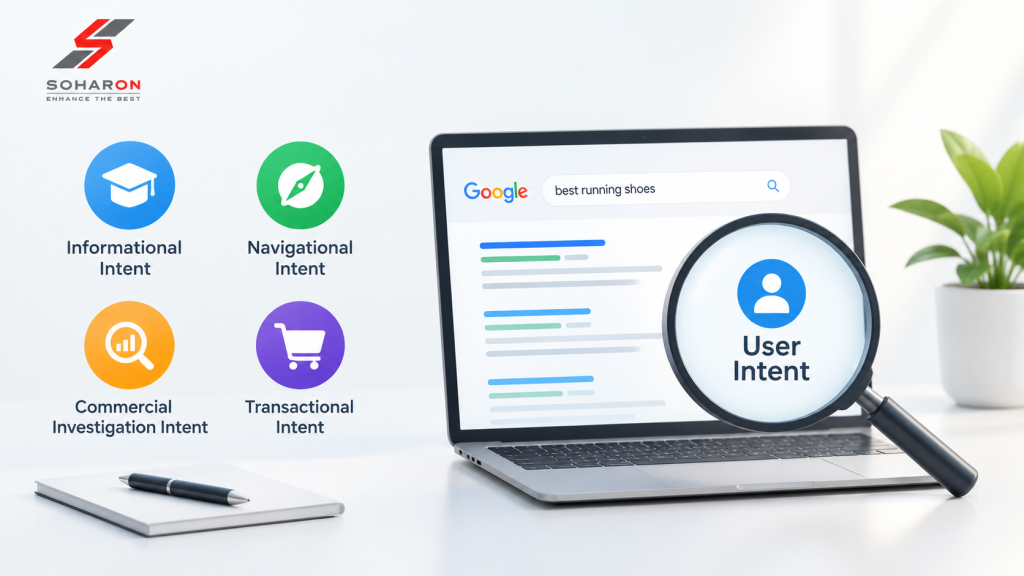
Two searches can share most of the same words yet serve entirely different needs. “Best running shoes” points to a buyer comparing products, while “running shoes size guide” points to someone seeking help with fit. Google has become highly skilled at telling these apart, and that skill now shapes search rankings. For any business aiming to attract customers rather than just visitors, search intent is where effective SEO begins.
What Is Search Intent?
Search intent, also called user intent, is the reason someone runs a search. Behind every query is a goal. The person might want to learn something, find a particular website, compare a few options, or buy.
Google wants to show the result that helps most. A page that fits what the searcher is after can beat a page with better technical optimization that answers the wrong question. This is why good SEO work begins with the audience and only then moves to keywords.
The Four Main Types of Search Intent
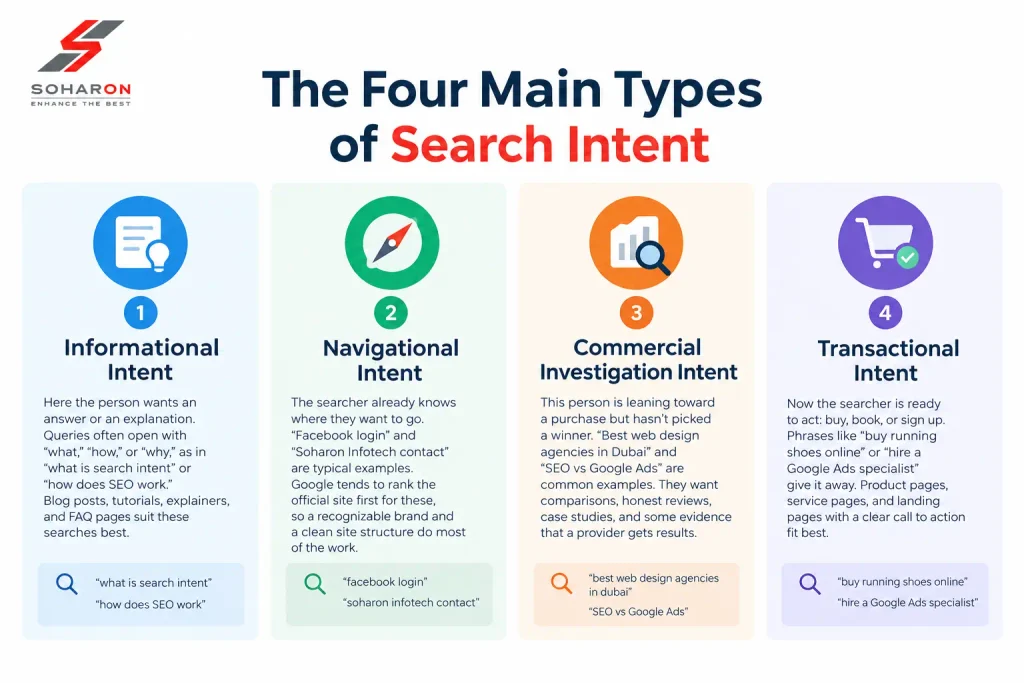
1. Informational Intent
Here the person wants an answer or an explanation. Queries often open with “what,” “how,” or “why,” as in “what is search intent” or “how does SEO work.” Blog posts, tutorials, explainers, and FAQ pages suit these searches best.
2. Navigational Intent
The searcher already knows where they want to go. “Facebook login” and “Soharon Infotech contact” are typical examples. Google tends to rank the official site first for these, so a recognizable brand and a clean site structure do most of the work.
3. Commercial Investigation Intent
This person is leaning toward a purchase but hasn’t picked a winner. “Best web design agencies in Dubai” and “SEO vs Google Ads” are common examples. They want comparisons, honest reviews, case studies, and some evidence that a provider gets results.
4. Transactional Intent
Now the searcher is ready to act: buy, book, or sign up. Phrases like “buy running shoes online” or “hire a Google Ads specialist” give it away. Product pages, service pages, and landing pages with a clear call to action fit best.
How Google Understands Search Intent
Google can’t know what’s in anyone’s head. It reads a mix of signals and makes an educated guess.
- Language understanding: RankBrain, BERT, and MUM help Google grasp what a query means in context instead of matching words one by one. Someone who searches “can you take medicine on an empty stomach” gets treated as a person with a specific question, even though the query has no obvious keyword.
- User behavior signals: Google studies how people behave on results pages at scale. If many searchers click a result and bounce straight back, the page probably didn’t help. Pages that keep people reading and answer the question tend to hold their position better.
- Search result features: The layout of a results page says a lot. Featured snippets and “People Also Ask” boxes suggest an informational search. Shopping results and product carousels suggest someone ready to buy. A map pack means the search is local.
- Context and personalization: Location, device, language, and past searches all change the results. Search “coffee shop” on your phone and you’ll see places nearby, because Google assumes you want to go somewhere soon.
Why Search Intent Matters for Your Website
Plenty of good content never ranks because it targets the wrong intent. Picture a business that writes a polished sales page for a keyword where Google only lists how-to guides. The writing might be excellent, but it doesn’t match what searchers came for, so it rarely shows up.
Getting intent right pays off in a few ways:
- Higher rankings, since your page fits what Google already wants to show.
- Better engagement, since visitors find what they came for and stick around.
- Stronger conversions, since the right content meets people at the right point in their decision.
- Lower bounce rates, since fewer visitors leave disappointed.
How to Optimize Your Content for Search Intent
Check the search results first: Before you write anything, search your target keyword and look at what ranks. Blog posts, product pages, and comparison lists each tell you something. The format Google keeps rewarding is the format users expect.
Match the content type and depth: If the top results are step-by-step guides, write a guide. If they’re service pages, build a focused service page. A format that doesn’t fit the query will fight you the whole way.
Answer the question quickly: Put the key point near the top and add detail below it. Clear headings, short paragraphs, and practical examples help readers scan.
Map keywords to the buyer journey: Use informational content to build awareness, comparison content to help people decide, and conversion pages to close the sale. This is how effective search engine optimization works in practice: every page has one clear job.
Build pages that deliver on the promise: Intent doesn’t stop at the click. A fast, mobile-friendly, well-organized site keeps people engaged, which is why professional website development and SEO belong together.
Support high-intent searches with paid campaigns: When you want visibility on transactional keywords right away, targeted Google Ads can put your offer in front of people ready to buy while your organic content builds up.
Common Search Intent Mistakes to Avoid
- Targeting transactional keywords with purely informational content, or the other way around.
- Stuffing keywords instead of answering the real question.
- Treating similar keywords as identical when their intent differs.
- Leaving older pages untouched while search results and user expectations shift.
Conclusion:
Search intent is the link between what people type and what they actually need. Google keeps improving at reading it, so the sites that win are the ones that serve it best. Know your audience, match each page to a goal, and make every page easy to use.
If you’d like help turning search intent into traffic and leads, Soharon Infotech can build a strategy that connects your business with the right customers at the right moment.




 SHARE YOUR REQUIREMENTS WITH US!


