


Running a business, whether small or big, in the UAE means competing with many brands; it is not as easy as you think. From local shops to well-known companies, having a good product or service is crucial, but having an online platform for your products is also important.
This is where digital marketing comes in. A clear, planned strategy can go a long way in putting your small business in front of the right people without spending more on every channel.
This is where digital marketing makes a difference. A well-planned strategy can help small businesses attract potential customers without spending heavily on every available platform.
The UAE is a massive market for digital growth. The Government has a Digital Economy Strategy which aims to get the digital economy’s contribution to GDP up from 9.7% in 2022 to 19.4% in ten years’ time. That’s a huge opportunity for small businesses to reach customers via online channels.
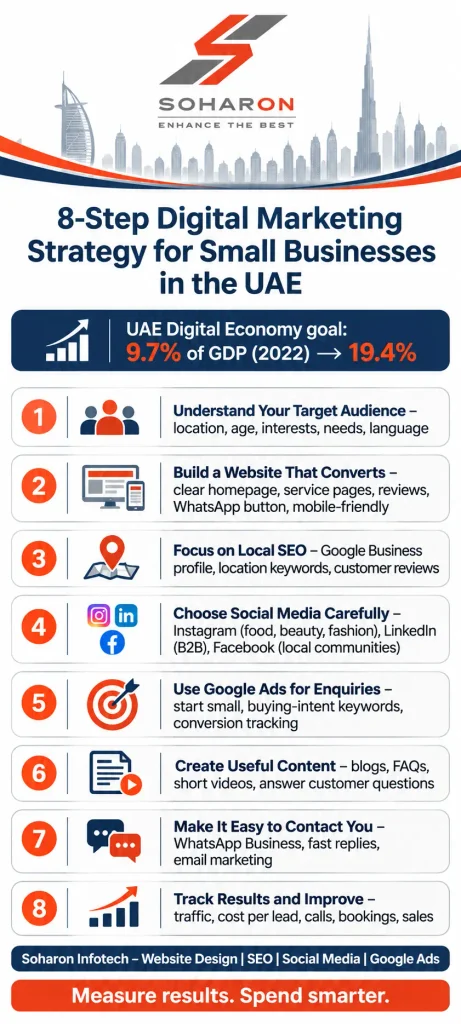
1. Understand Your Target Audience
Understanding your audience and who you want to reach is the most important step before choosing the marketing platforms. A business that cannot try to speak to everyone will not create effective campaigns.
Focus on your customer’s location, age bracket, interests, needs and buying habits. Also consider the languages they use when searching.
For instance, a home renovation company in Dubai might be targeting villa owners, apartment dwellers and property investors. A restaurant in Sharjah might be targeting the residents and workers in the area.
Knowing these details helps you choose the right message, keywords and advertising platforms.
2. Build a Website That Converts Visitors
Your website is often where potential customers go after seeing an advertisement or finding your business on Google. It should explain your services clearly and make it easy for visitors to take the next step.
A small business website should include:
- A clear homepage explaining what the business offers.
- Separate pages for important products or services.
- Contact details, location and working hours.
- Customer reviews, testimonials or project examples.
- Clear enquiry buttons and WhatsApp contact options.
Mobile performance also matters. Many customers browse and contact businesses using smartphones. If your website loads slowly or is difficult to use on a small screen, visitors may leave before making an enquiry.
Avoid filling every page with promotional messages. Give visitors useful information that helps them decide whether your business is right for them.
3. Focus on Local SEO
Local SEO allows businesses to show up whenever someone looks for services in a specific locality. This information can help restaurants, clinics, salons, repair services, interior design, and more.
You should start by creating and updating your own Google Business account. Enter the business name, location, phone number, working hours, photos, services, etc.
Your own website also has to use location-relevant keywords. For example:
• Digital marketing agency in Dubai
• Interior design agency in Abu Dhabi
• Air conditioning repair in Sharjah
Do not just open up pages using the name of the city. Each page must provide useful information about the service offered and the geographic area.
Customers’ testimonials are also important. Make sure your customers leave enough positive feedback about your work.
4. Choose Social Media Platforms Carefully
Not every business needs to be active on every social media platform. For example, a small business doesn’t need every social media platform to develop its business; it is better to focus on the one platform where its customers spend time.
Instagram is a good fit for those engaged in the food industry, beauty sector, fashion or interior design. LinkedIn is a must for B2B, consultants, and other companies that work with professionals. Facebook is the one that helps to gather communities around local events.
5. Use Google Ads to Generate Enquiries
SEO and social media can help build visibility over time, but some businesses need enquiries sooner. Google Ads can help by showing advertisements to people searching for specific products or services.
However, a large advertising budget does not guarantee better results.
Start with a small, manageable budget and focus on keywords that show clear buying intent. A company offering website development, for example, may target searches such as “website development company in Dubai” rather than broad terms like “websites”.
Create relevant landing pages and make sure conversion tracking is working. Monitor enquiries, calls, cost per lead and lead quality.
If an advertisement receives clicks but very few genuine enquiries, review the keywords, ad message and landing page before increasing the budget.
6. Create Useful Content
Content marketing helps businesses answer customer questions and build trust before a purchase.
A small business can publish blogs, service guides, FAQs, short videos and practical social media posts. The topics should come from questions customers regularly ask.
For example, an accounting firm in the UAE could publish articles about VAT registration, bookkeeping and common financial mistakes. A fitness studio could share exercise advice, beginner guides and information about personal training.
Content should be easy to understand and genuinely helpful. Avoid publishing articles only to add keywords to your website. A useful article that answers one specific question can be more valuable than several generic posts.
7. Make It Easy for Customers to Contact You
Getting website visitors and social media engagement is only part of the job. Businesses also need a simple way to turn interest into enquiries.
WhatsApp Business can help customers ask questions, request prices and discuss services. Add a WhatsApp contact option to your website and social profiles where appropriate.
Make sure someone is responsible for replying to messages. A delayed response can cause a potential customer to contact another business.
You can also use email marketing to stay connected with customers who have agreed to receive updates. Share useful information, service announcements and relevant offers rather than sending frequent sales messages.
8. Track Results and Improve Your Strategy
Digital marketing should be reviewed regularly. Check which channels bring visitors, enquiries and actual customers.
Useful measurements include:
- Website traffic and enquiries.
- Google search impressions and clicks.
- Cost per lead from paid advertisements.
- Social media messages and engagement.
- Calls, bookings and completed sales.
A business may discover that Instagram generates attention while Google Search brings more serious enquiries. That information helps decide where the next month’s budget should go.
How Soharon Infotech Supports Small Businesses
Running a website, handling SEO and social media, and investing in paid marketing is time-consuming, especially when a small team is responsible for daily tasks.
Soharon Infotech helps companies boost online visibility by offering services including website design, SEO, social media, and Google Ads. The best approach is to pick the right digital channels and improve performance.






 SHARE YOUR REQUIREMENTS WITH US!


