


Artificial intelligence is not just for big tech companies anymore — it is used in everyday life now. In 2026, it is the engine quietly and sometimes loudly running behind everyday business decisions, customer interactions, marketing strategies, and operational workflows. If you run a business and haven’t seriously assessed how AI affects your industry, you are already behind.
This guide breaks down exactly how AI is reshaping business operations right now, and more importantly, what your business should do about it.
The Shift Has Already Happened
For years, business leaders talked about “adopting AI.” In 2026, that conversation is over. 91% of companies report using AI technologies in some business functions. AI is no longer a pilot project sitting in an innovation lab, it is embedded in revenue engines, risk systems, supply networks, and customer-facing platforms across every industry.
Worker access to AI rose by 50% in 2025, and the number of companies with 40% or more of their AI projects in production is set to double in just six months. The pace is staggering — and businesses that treat AI as optional are watching their competitors pull ahead in real time.
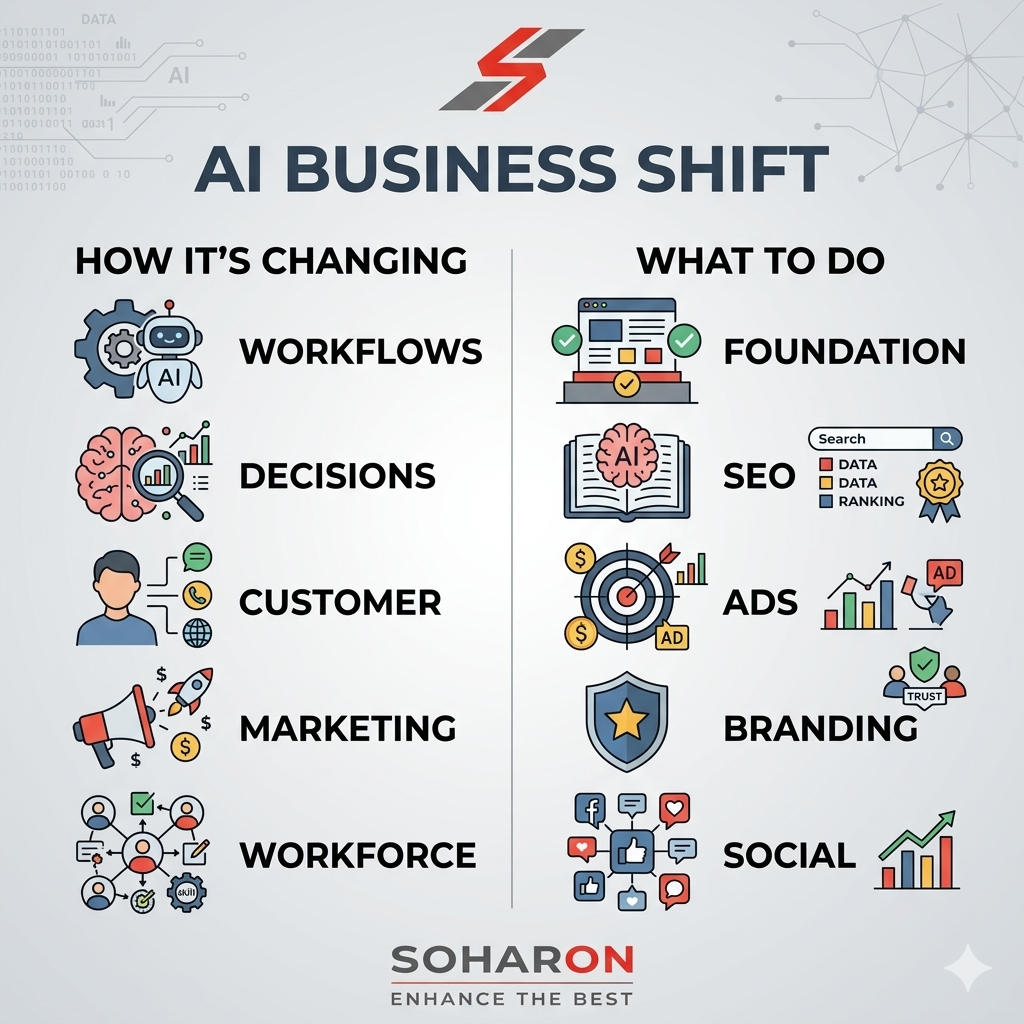
5 Ways AI Is Transforming Business Operations in 2026
1. Agentic AI Is Running Entire Workflows
The most significant shift in 2026 is the rise of agentic AI — systems that don’t just answer questions but autonomously execute complex, multi-step tasks.
The era of simple prompts is over. AI now orchestrates complex, end-to-end workflows semi-autonomously, creating what experts are calling “digital assembly lines” that run entire workflows.
Real-world results are impressive. Global manufacturer Danfoss used AI agents to automate email-based order processing, automating 80% of transactional decisions and reducing average customer response time from 42 hours to near real time.
For businesses, this means tasks that once required teams of people — data entry, order processing, lead follow-up, customer service triage — can now be handled by intelligent systems around the clock.
2. Decision-Making Is Now Data-Driven by Default
Predictive analytics powered by machine learning allows businesses to anticipate customer behaviors, forecast demand, and react to market trends with confidence. AI processes datasets at a scale that is simply impossible for human teams — and it does so in seconds.
Senior leadership is now picking focused spots for AI investment, looking for key workflows or business processes where payoffs can be significant, executing through centralized hubs that bring together reusable tech components, frameworks for assessing use cases, and skilled people.
In practical terms, this means your marketing budget, pricing strategy, and product roadmap should all be informed by AI-driven insights — not just gut instinct.
3. Customer Experience Is Being Redefined
The era of scripted chatbots and reactive customer service is coming to an end. In 2026, AI agents are establishing hyper-personalized, “concierge-style” service as the new standard for customer interactions.
Customers today expect faster responses, personalized recommendations, and seamless experiences across every channel — from your website to your social media pages. Businesses that deliver this level of experience are winning loyalty. Those that don’t are losing it.
4. Marketing Has Become Smarter (And More Competitive)
AI has fundamentally changed digital marketing. Algorithms now determine which ads get shown, which content ranks in search, and which audiences convert. Businesses that automate processes are reporting up to 30% productivity gains in 2026. In marketing, this means more output with less manual effort — but only if your strategy is correctly built.
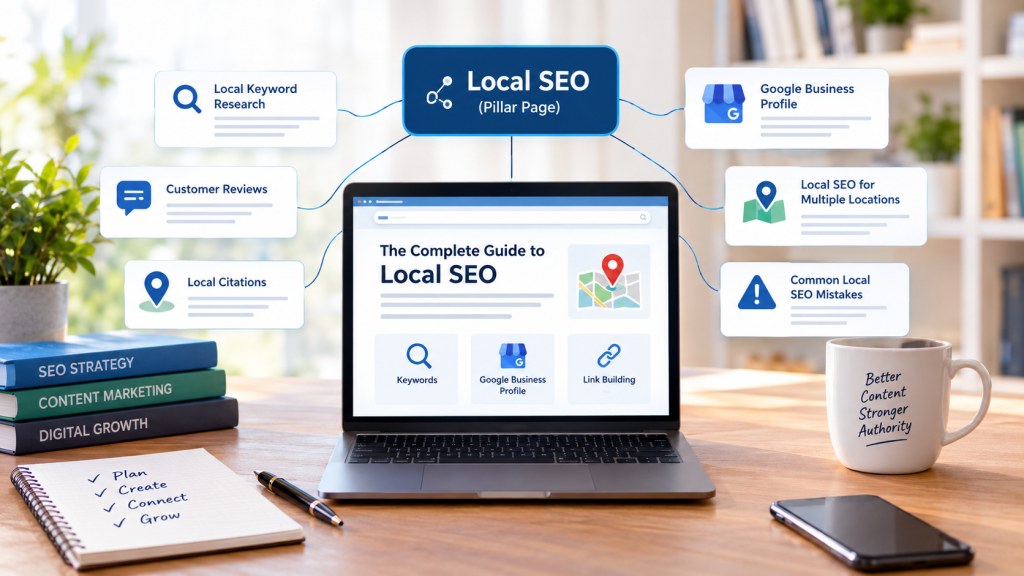
Search engine optimization is one of the most AI-impacted areas. Google’s algorithms are more sophisticated than ever, rewarding content that demonstrates genuine expertise, authority, and trust. A technically sound SEO strategy is no longer about stuffing keywords — it’s about creating content ecosystems that AI-powered search can understand and rank confidently.
Similarly, Google Ads campaigns powered by AI bidding strategies now outperform manually managed campaigns across nearly every metric. But the strategy behind those campaigns — audience targeting, messaging, landing page experience — still requires human expertise to get right. Working with a team that understands Google Ads management ensures your budget works harder and reaches the right people at the right moment.
5. Workforce and Organizational Structures Are Changing
AI is no longer a side experiment — it is rewiring how work gets done, shifting from isolated tools to platforms that sit at the center of workflows, decisions, and customer journeys.
Some companies are merging technology and people-leadership functions to ensure that systems and workforce design evolve together. The direction is consistent: roles, skills, and career paths must be rebuilt, not simply adjusted.
Businesses that adapt their team structures to work alongside AI — rather than resist it — will out-execute those that don’t.
What Your Business Should Do Right Now
Understanding AI trends is useful. Acting on them is what separates growing businesses from stagnating ones. Here is a clear action plan:
1. Audit Your Digital Foundation:
AI-powered tools can only amplify a strong foundation. If your website is outdated, slow, or not mobile-friendly, no amount of AI-driven marketing will save it. Investing in professional website development is the first and most critical step — your website is your 24/7 salesperson, and it needs to perform like one.
2. Build an AI-Informed SEO Strategy:
Google’s AI-powered ranking systems reward businesses that produce genuinely helpful, structured, and authoritative content. Your SEO strategy must evolve with this — focusing on topical authority, technical optimization, and user experience signals that AI algorithms are now trained to detect.
3. Leverage Paid Advertising with Precision:
AI has made Google Ads more powerful — but also more competitive. Smart bidding, responsive ads, and performance max campaigns are now baseline expectations. Without expert management, ad budgets get wasted fast.
4. Strengthen Your Brand Identity:
In an era where AI can generate content at scale, the businesses that stand out are those with a clear, distinctive, and human brand identity. AI is shifting from isolated tools to platforms that sit at the center of customer journeys and every touchpoint in that journey should reflect a brand that people trust. Investing in professional branding is how you ensure your business is memorable, not forgettable.
5. Show Up Where Your Customers:
Social media marketing remains one of the highest-ROI channels available — especially when AI tools are used to analyze performance, optimize content timing, and identify the formats that resonate with your audience. Businesses that show up consistently and strategically on social platforms build communities, not just followers.
- Choose the Right Platforms — Focus where your audience spends time; quality presence on two platforms beats a weak presence on five.
- Post Consistently — A steady content schedule builds trust and keeps your brand top of mind with both your audience and algorithms.
- Engage, Don’t Just Broadcast — Reply to comments, answer DMs, and join conversations; loyalty is built through interaction, not just posting.
- Boost What Already Works — Amplify your best organic content with paid promotion using Meta’s AI-driven ad targeting to reach the right audience.
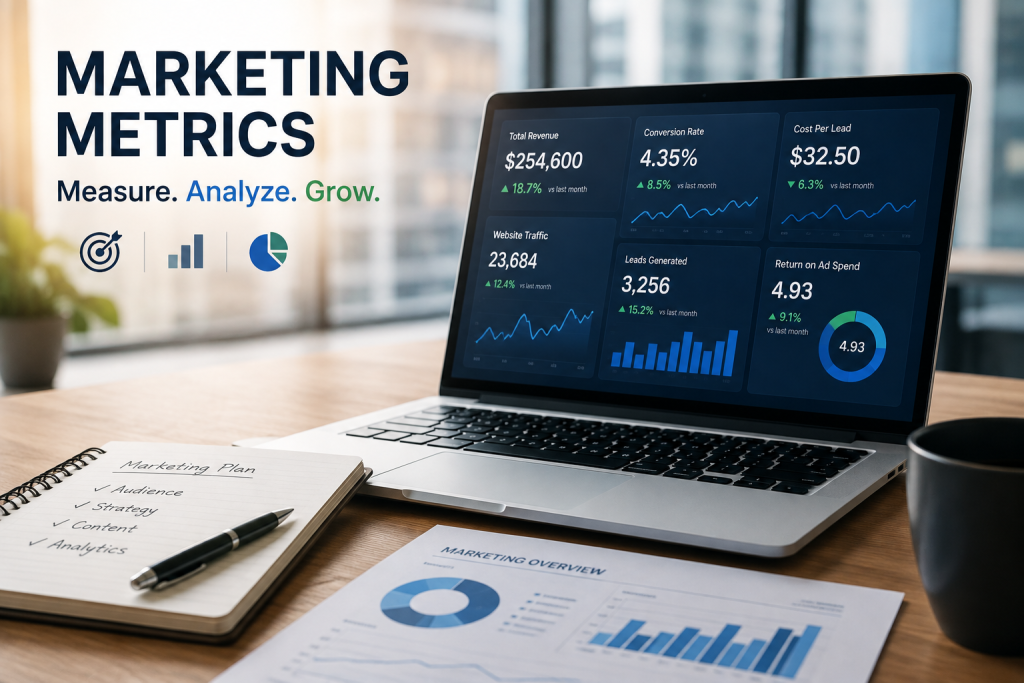
- Track What Actually Matters — Monitor clicks, leads, and conversions — not just likes — to measure your true social media ROI.
Summary:
The organizations that succeed will probably not be those with the most sophisticated technology — they’ll be those with the courage to redesign rather than automate, the discipline to connect every investment to business outcomes, and the velocity to execute before the window closes.
AI is changing business operations faster than most companies are prepared for. But the opportunity is enormous for businesses that move with clarity and intention. The question is not whether AI will affect your business — it already has. The question is whether you are positioned to benefit from it.
At Soharon, we help businesses build that position — through smart website development, results-driven SEO, strategic Google Ads, compelling social media marketing, and branding that makes you stand out. If you are ready to build a digital strategy that works in 2026 and beyond, let’s talk.




 SHARE YOUR REQUIREMENTS WITH US!


